Next.js and React development:
the stack Kinetico ships every product on
Kinetico Agency is a product design and engineering studio in Pokhara, Nepal, and a Next.js and React development company by practice rather than label: every product it ships is TypeScript end to end — React with Next.js on the front, NestJS on Node.js behind it, PostgreSQL underneath — designed and built by the same senior team. A first version is $15,000–$50,000 fixed over 6–12 weeks, in your GitHub organization from the first commit.
What does Kinetico build with Next.js and React?
Products, not just sites: the same stack carries a SaaS platform, a booking system, a brand surface and the admin console behind them. Each row names the shipped work it comes from.
| Kind of product | What it involves | How we use the stack | Shipped example |
|---|---|---|---|
| SaaS and platform applications | Roles and permissions, dashboards, billing, admin consoles, jobs and integrations — the products founders raise money to build | React 19 (TanStack Router) or Next.js on the front · NestJS + PostgreSQL behind | Trile — six surfaces on one API |
| Customer-facing sites with real flows | Booking, ordering, payments, live status — sites that are secretly systems | React + Vite for the app, Next.js for the public menu/site surface | Paradiso — floor-plan booking, in production |
| Marketing and brand surfaces | Server-rendered pages that must be indexed and load fast, with motion and WebGL where the brand earns it | Next.js 16, React 19, Tailwind v4; R3F / OGL when needed | Himnadi, Longwave, Loam — and this site |
| Internal tools and admin | The console the business runs on: users, content, support actions, reporting | Same design system and API as the product; usually React + TanStack Router | Trile admin and merchant dashboard |
Why Next.js and React — and what sits around them?
Deliberately boring, chosen once, used everywhere. The test for every layer is the same: does the engineer you hire after launch already know it, and can a small team work anywhere in the codebase? We don't pick a stack per project; we pick the one that keeps your hiring pool largest.
| Layer | Choice | Why |
|---|---|---|
| Language | TypeScript, end to end | One language across design tokens, frontend, backend and scripts; the same people can work anywhere in the codebase. |
| Frontend framework | React 19 with Next.js 16 — or TanStack Router on Vite for signed-in surfaces | Server rendering by default where a page must be indexed; a fast client router where it lives behind a login. Same components either way. |
| Backend | NestJS on Node.js | Structured, typed, testable; the boring choice that the next engineer already knows. A real API, so a second client (admin, mobile) is a client, not a rewrite. |
| Database | PostgreSQL (Drizzle ORM) | Relational from day one — most MVPs that 'don't need SQL yet' need it by month three. |
| Around the core | TanStack Query, Tailwind v4, Better Auth, Zod + OpenAPI, BullMQ | Data fetching, styling from tokens, auth, typed contracts, background jobs — each bought as a library, not built. |
| Hosting | Vercel + a managed Postgres, or your cloud | Deploy in your accounts, monitored, with the bill in your name. |
| Design | Figma + a coded design system | Tokens and components live in the repo, so the design and the product cannot drift apart. |
Next.js when
- The page must be indexed — marketing, content, menus, public profiles.
- First paint on a slow network matters more than in-app interaction.
- Content changes per request and should still arrive as complete HTML.
React + TanStack Router when
- The surface lives behind a login and SEO is irrelevant.
- Interaction speed and simple deployment beat server rendering.
- The same components, tokens and API — the choice is per surface, not per project.
What does a Kinetico Next.js codebase look like at handover?
The point of a standard stack is that the code outlives the studio. Every build ships with the seven things below, in your name, so an engineer you hire later can start without us.
| Item | What it means in the repository |
|---|---|
| Repository | Your GitHub organization from the first commit; TypeScript strict; one repo per product with the API and every surface in it |
| App Router structure | Routes, layouts and metadata per surface; server components by default, client components where interaction needs them |
| Design system | Tokens and typed components in the repo; Figma is a view of the same system |
| API contract | NestJS modules with Zod-typed inputs and OpenAPI output — the contract the frontend and any future client build against |
| CI and tests | Build and checks on every push from week 1; tests kept in the QA line rather than cut for scope |
| Deployment | Vercel or your cloud, preview per branch, production in your accounts, monitoring in place |
| Documentation | How it is deployed, how it is run, what every module does — so an engineer you hire can start without us |
How much does a Next.js build cost with Kinetico, and how long does it take?
The same as any first version: $15,000–$50,000, fixed after one scoping call, over 6–12 weeks. Design is included — the people who design the screens write the components — and the tier is set by roles × screens × integrations, not by an hourly rate.
6 weeks · fixed price
1 user role · 6–10 screens · auth + one core workflow · 0–1 integration
Full pricing →Standard8 weeks · fixed price
2 roles · 12–20 screens · core workflow + admin · payments or 2 integrations
Full pricing →Full10 – 12 weeks · fixed price
3 roles · 20–30 screens · billing, notifications, reporting · 3+ integrations
Full pricing →How is Kinetico different from a typical Next.js or React development company?
Most vendors on this query sell React capacity — developers by the hour or the month — or a large-agency process. Kinetico sells a designed, built and handed-over version at a fixed price, by a small senior team where the designer and the engineer are the same person. Facts below are from each vendor's own page.
| Vendor | Shape | Engagement model | Published price |
|---|---|---|---|
| Kinetico | Small senior team; designers are the engineers | Fixed price per scoped version ($15k–$50k first version) | Published |
| Halo Lab | "10Y of Design-Driven development", "60+ projects completed annually" | Not specified on the Next.js page | Not disclosed |
| Bacancy Technology | "1050+ IT Professionals", "14+ Years of Experience" | Dedicated developers / staff augmentation / outsourcing | "$22 Hourly", "$2880 Monthly" (160 h), "$15,000 For Team" (5 devs + Scrum Master) |
| 9thCO | Toronto agency; Next.js services "since 2017" | Six-phase process; get-a-quote | Not disclosed |
If you have a technical lead and need React capacity to direct daily, a dedicated-team vendor or a staffing marketplace is the right shape — see staff augmentation vs dev shop vs product studio. If you don't, buy an outcome.
What has Kinetico shipped on Next.js and React?
The stack of each project as published on its case study — one client platform, one product platform of our own, three self-initiated pieces, and the site you are reading.
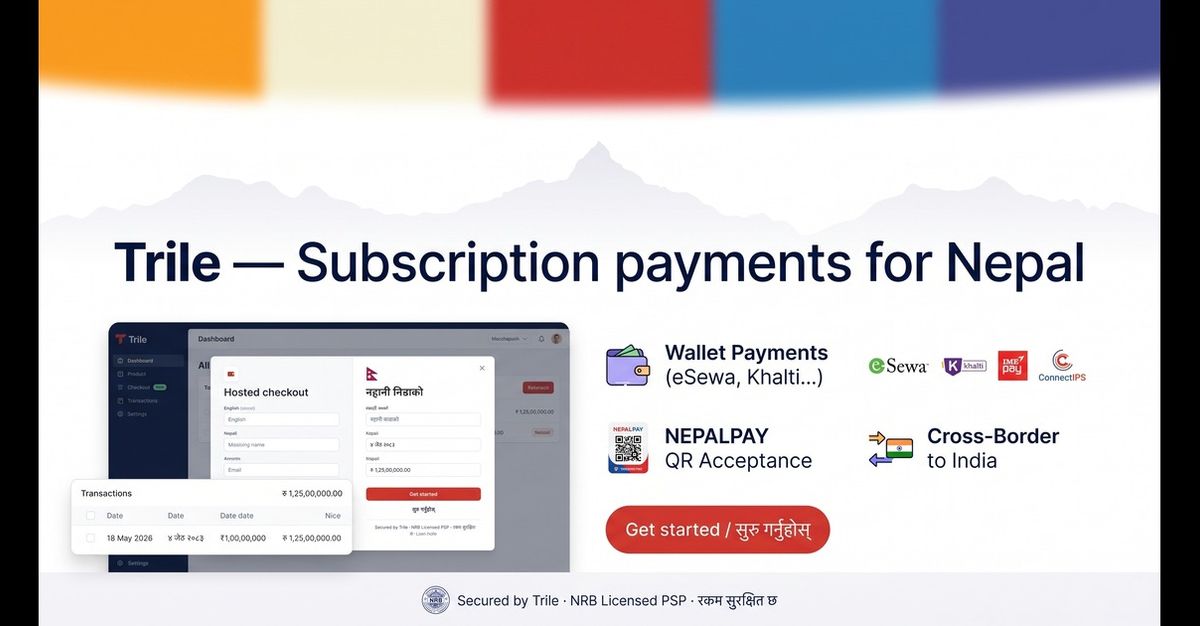
Trile — six applications on one API

Paradiso — a floor plan you book from
| Project | Published stack | What it is |
|---|---|---|
| Trile | React 19 · TanStack Router / Query · NestJS · PostgreSQL + Drizzle · BullMQ · Better Auth · Zod + OpenAPI · Tailwind v4 · Astro | Six applications on one API — subscription billing for a market with no card-on-file rail; ~2,200 TypeScript files |
| Paradiso | React + Vite · Radix / shadcn · Next.js (menu) · WebSockets · Fonepay | Floor-plan table booking with QR payment and the admin console the floor runs on — in production |
| Himnadi | Next.js 16 · React 19 · React Three Fiber · GSAP + Lenis · Playwright | Self-initiated editorial WebGL piece |
| Longwave | Next.js 16 · React 19 · OGL · Web Audio API · Zustand | Self-initiated audio-reactive frontend |
| Loam | Next.js 16 (Turbopack) · React 19 · Tailwind v4 · TypeScript | Self-initiated brand art direction and site |
| kinetico.agency | Next.js App Router · React 19 · TypeScript · static routes · build-time OG | This site — every page is complete HTML before JavaScript runs |
Who should hire Kinetico for Next.js work — and who should not?
A good fit
- Founders who want a first version on a stack their future engineers already know, designed and built by one team at a fixed price.
- Teams with an approved design who want it built in Next.js/React with every state finished and a coded design system.
- A live product on React or Next.js that needs a scoped next version, not a rewrite.
- Public surfaces that must be indexed — server-rendered, complete HTML, schema in place.
Not a fit — and where to go instead
- Next.js developers by the hour or the month under your own lead — a staffing marketplace or dedicated-team vendor.
- A CMS-templated brochure site with no product behind it — a Webflow or WordPress agency will do it for less.
- Framework migrations across a large enterprise estate — a large services firm is built for that; we are not.
- A one-screen idea — a no-code tool answers it for under $5k. See PoC vs prototype vs MVP.
Next.js and React development — frequently asked questions
- Is Kinetico a Next.js development company or a React development company?
- Both, by practice: every product Kinetico ships is TypeScript end to end with React on the front. Next.js is the default where server rendering earns its keep — marketing and SEO surfaces, menus, content — and React with a client router (TanStack Router on Vite) is used for signed-in application surfaces where SEO is irrelevant and a fast SPA is what the user feels. Trile's six surfaces run React 19 on NestJS and PostgreSQL; Himnadi, Longwave, Loam and this site run Next.js 16.
- When do you use Next.js, and when plain React?
- Next.js when a surface needs server rendering by default: public pages that must be indexed, content that changes per request, first-paint performance on slow networks. React with TanStack Router and Vite when the surface lives behind a login and the priorities are interaction speed and a simple deployment. Both share the same TypeScript, the same design system and the same API, so the choice is per surface, not per project.
- What backend do you pair Next.js with?
- NestJS on Node.js with PostgreSQL through Drizzle ORM — typed, structured, testable, and the boring choice the next engineer already knows. Next.js API routes are fine for a thin BFF; anything with roles, payments, jobs or a second client (an admin console, a mobile app) gets a real API. Trile is six applications on one NestJS API.
- Where do you deploy Next.js apps?
- Vercel with a managed Postgres, or your cloud — in your accounts, with the bill in your name and monitoring in place at handover. Nothing depends on Kinetico continuing to exist: the repository is in your GitHub organization from the first commit.
- How much does a Next.js build cost, and how long does it take?
- The same as any first version with Kinetico: $15,000–$50,000 fixed after one scoping call, over 6–12 weeks — Lean $15k–$22k (6 weeks), Standard $22k–$35k (8 weeks), Full $35k–$50k (10–12 weeks). Which end you land on is set by roles × screens × integrations, not by an hourly rate; design is included because the people who design the screens write the components.
- Can we hire Next.js developers from Kinetico by the hour or the month?
- No. Kinetico sells outcomes — a designed, built, deployed and handed-over version at a fixed price — not engineers by the hour. If you have a technical lead and need React capacity to direct daily, a staffing marketplace or a dedicated-team vendor is the right shape; our comparison of staff augmentation, dev shops and product studios explains where each fits.
- Can you take over an existing Next.js or React codebase?
- Bring it to the scoping call like anything else — the repository, what is live, what breaks. The next version is written up as a scope with its cost and weeks before any work starts; whether that means continuing the codebase or replacing parts of it is decided in the written scope, not guessed at.
- Does Next.js help with SEO?
- Server rendering by default means every public page is complete HTML before any JavaScript runs — which is what search engines and AI crawlers index. This site is built that way: fetch any page as GPTBot and you get the full text. Next.js does not do the rest of SEO for you; the structure, the schema and the words are still design decisions.
Who wrote this, and where the facts come from
Written by the Kinetico team. Kinetico Agency is a product design and engineering studio in Pokhara, Nepal, where the same senior team designs the product and writes the code that ships it. Stack facts per project are the published stack lists on each case study; prices are the studio's published tiers on pricing; vendor facts are quoted from each vendor's own page, fetched 2026-08-17 and linked in the table.
Published 2026-08-17 · Last reviewed 2026-08-17 · Kinetico Agency, Pokhara
What to ask next
- →What does the whole build include — tiers, calendar, handover?
- →Software development for startups — from an idea, a design, or a live product
- →What does the design half include — every state, a design system in the repo?
- →What does Kinetico charge, and what moves the number?
- →What does a web app cost by product type, and to run?
- →Where does the money go in a software budget?
- →Should a startup outsource at all — and how?
Book a 30-minute scoping call
Bring the problem and the constraint — or the design, or the repository. You leave with a written scope and one number within five working days, and if a studio is the wrong shape for your stage, we will say so.
Prefer email? hello@kinetico.agency